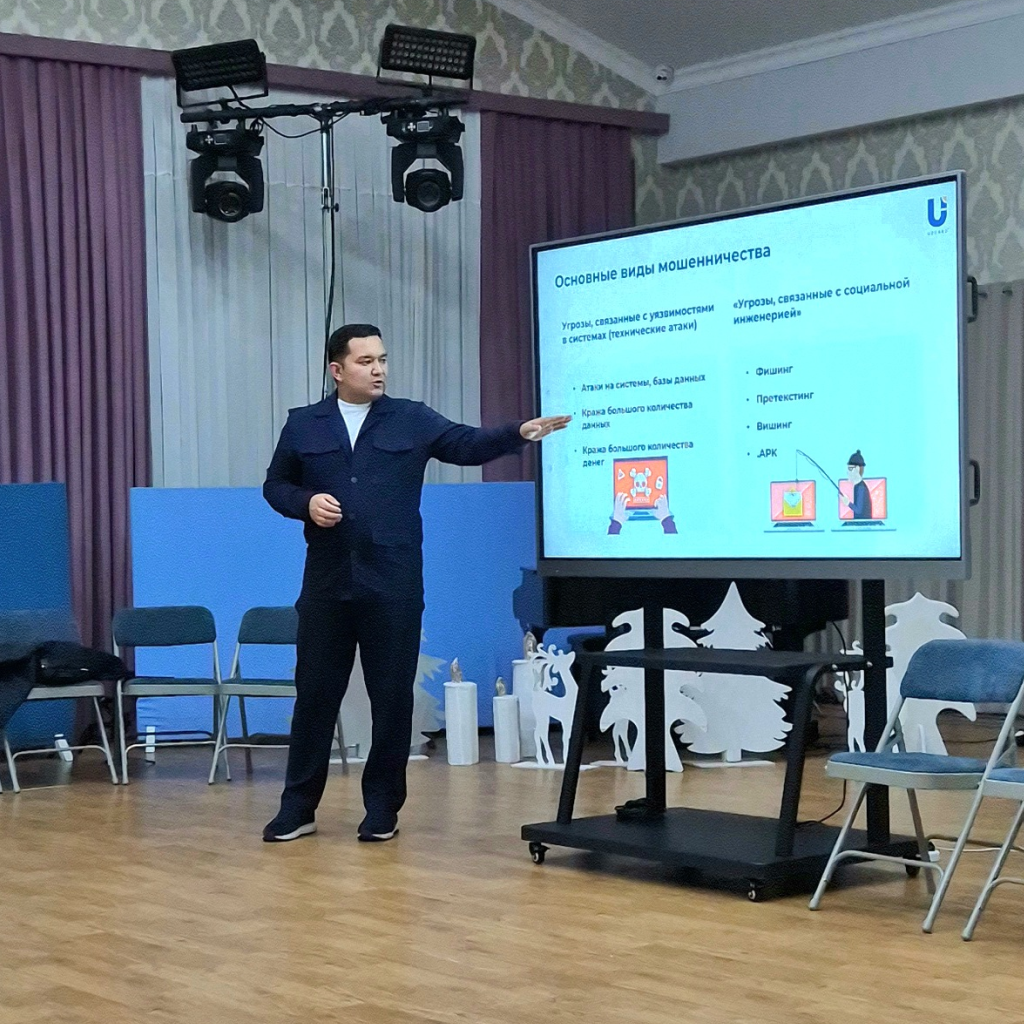
On 24 December, a UZCARD representative—Botir Shokamolov, Deputy Director for Information Security—delivered a cybersecurity training session for teachers at the capital’s Leader School. The initiative aimed to enhance digital literacy and develop sustainable safe-behavior skills in the digital environment among members of the education community.
During the session, participants received a structured overview of information security fundamentals: the role of information as a valuable asset, key risks in the digital environment, and why data protection has become an integral part of everyday life. Particular attention was paid to the principles of confidentiality, integrity, and availability, as well as to protecting personal and confidential data.
The practical module focused on the most common forms of cyber fraud and social engineering techniques. Teachers learned how to identify phishing emails, fraudulent websites, and suspicious messages in messengers, what indicators may signal an attempted scam, and received basic recommendations for safe use of digital services and for creating strong passwords.
According to Botir Shokamolov, improving cybersecurity awareness is especially important for educators who work with information daily and interact with children and teenagers. It is essential that teachers, equipped with up-to-date knowledge in information security and fraud prevention, are able to pass these skills on to their students.
“Today, cyber threats affect everyone—regardless of profession or digital skill level. Teachers are in a particularly responsible position, as they shape the younger generation’s culture of interacting with technology. Our goal is to provide clear and practical tools that help people navigate the digital space safely,” Botir Shokamolov noted.
The training for Leader School continues UZCARD’s systematic outreach efforts in cybersecurity.
Over the year, the company implemented a large-scale educational initiative, CyberWeek, organized by UZCARD in cooperation with the Ministry of Internal Affairs and the Central Bank of the Republic of Uzbekistan. The initiative included outreach events in the regions, open lectures, and awareness campaigns aimed at improving digital literacy and countering online fraud. Media formats were also used, including screenings of the Kazakh TV series “Scammers,” helping to communicate cybersecurity topics to a wide audience in an accessible and engaging way.
Holding such training sessions is part of UZCARD’s long-term strategy to promote a culture of safe use of digital technologies and to strengthen trust in the cashless payment infrastructure.